The Biotech Startup Trying to Change What Diabetes Treatment Can Do
Diabetes has become one of the defining health challenges of the modern world. It affects how people eat, work, travel, exercise, sleep, and plan their lives. It requires constant monitoring, long-term medication, difficult lifestyle changes, and ongoing vigilance against complications that can affect the heart, kidneys, nerves, eyes, and blood vessels. For many patients, treatment becomes a lifelong effort to keep the disease under control. That distinction matters.
Most current diabetes therapies are designed to manage blood glucose, improve insulin sensitivity, stimulate insulin release, reduce glucose production, delay carbohydrate absorption, or help the body remove excess glucose. These treatments can be enormously valuable and, in many cases, lifesaving.
But management is not the same as restoring the biological function that has been lost.
The deeper problem in diabetes is that the pancreatic beta cells responsible for producing insulin become damaged, dysfunctional, or depleted. In type 2 diabetes, the body may become resistant to insulin while beta cells struggle to compensate and progressively lose function. In type 1 diabetes, the immune system attacks insulin-producing beta cells directly.
Once that system begins to fail, patients often enter a long cycle of disease management.
Pharmasaga is trying to challenge that cycle. The Taiwan-based clinical-stage biotechnology company is developing a new class of small-molecule therapies targeting PDIA4, a protein its scientific foundation links to pancreatic beta-cell stress, dysfunction, and death. Its lead program, PS-001, is being developed for type 2 diabetes. Rather than focusing only on lowering blood glucose, the company’s broader ambition is to protect beta cells, preserve their function, and potentially support the body’s own ability to restore insulin-producing capacity. That is an extraordinarily ambitious idea. If successful, it could move diabetes treatment beyond controlling a number on a glucose monitor and toward changing the biological course of the disease itself.
The Problem: Managing Diabetes Is Not the Same as Repairing It
Modern diabetes care has advanced tremendously. Patients now have access to multiple classes of medication, continuous glucose monitors, connected insulin delivery systems, improved diagnostics, and more personalized approaches to metabolic health. These innovations have helped millions of people live longer and healthier lives. Yet the fundamental burden remains.
Most patients must continue managing the disease indefinitely. Medications may control glucose for a period of time, but diabetes can still progress. Beta-cell function may continue to decline. Treatment plans may become more complex. Some patients eventually require combinations of drugs or insulin therapy. Even when glucose is well managed, the risk of long-term complications does not disappear entirely. This creates a major unmet need.
What if a treatment could do more than compensate for beta-cell failure?
What if it could protect the cells that produce insulin?
What if it could interrupt the process that causes those cells to deteriorate?
And what if, one day, treatment could help restore enough biological function that diabetes becomes something closer to reversible rather than permanently managed? Those questions sit at the heart of Pharmasaga’s work.
Pharmasaga’s Scientific Foundation: Targeting PDIA4
Pharmasaga’s core technology grew from research originating at Academia Sinica, Taiwan’s leading national research institution. Scientists identified PDIA4 as a potentially important target in diabetes. PDIA4 belongs to a family of proteins involved in protein folding and cellular stress responses. Pharmasaga’s scientific rationale is that excessive or harmful PDIA4 activity contributes to beta-cell dysfunction and death. That makes PDIA4 more than a biomarker. It could be a therapeutic target.
Using molecular docking and drug-discovery methods, researchers identified compounds capable of inhibiting PDIA4. This work led to PS-001, a small-molecule drug candidate that Pharmasaga describes as a selective PDIA4 inhibitor. The company obtained an exclusive global license to develop the technology and has built its drug-development pipeline around the mechanism.
This is important because the mechanism is different from that of many conventional diabetes drugs.
Traditional therapies often act on blood glucose regulation, insulin secretion, insulin sensitivity, glucose absorption, or kidney-mediated glucose removal. Pharmasaga is aiming further upstream at a biological process associated with the survival and function of pancreatic beta cells. The company is not merely asking how to lower glucose more effectively. It is asking why the insulin-producing system is failing and whether that failure can be interrupted.
PS-001: A Different Approach to Type 2 Diabetes
PS-001 is Pharmasaga’s lead drug candidate for type 2 diabetes. It is being developed as an orally administered small molecule. According to the company, preclinical studies in diabetic mouse models showed that inhibiting PDIA4 could protect beta cells and produce disease-modifying effects, including diabetes reversal in those animal models. That result is scientifically exciting, but it must be understood carefully.
Animal evidence does not prove that a drug will produce the same result in humans. Many promising drug candidates fail during clinical development because human biology is more complex, safety profiles differ, or efficacy does not translate. PS-001 is now undergoing the clinical process required to answer those questions.

Its Phase I study is designed primarily to evaluate safety, tolerability, pharmacokinetics, food effects, and early signals of potential activity. Phase I is an essential first step, but it is not yet proof of therapeutic efficacy or disease reversal in patients. Still, reaching human trials is a major milestone.
Drug discovery is full of promising ideas that never move beyond the laboratory. Pharmasaga has advanced PS-001 through discovery, preclinical research, manufacturing preparation, regulatory review, and into clinical evaluation. The company is now planning the next stage of development. That is where a scientific hypothesis begins its real test.
Why Beta Cells Matter So Much
To understand Pharmasaga’s potential impact, it helps to understand the role of pancreatic beta cells.
Beta cells are specialized cells located in the pancreatic islets. Their job is to produce and release insulin in response to blood glucose. Insulin allows glucose to move from the bloodstream into cells, where it can be used or stored as energy. When insulin production becomes insufficient, or when the body becomes resistant to insulin, glucose accumulates in the blood.
In the early stages of type 2 diabetes, beta cells may work harder to compensate for insulin resistance. Over time, the stress can become unsustainable. Beta-cell function declines, the body produces less effective insulin, and glucose control becomes more difficult. This means beta-cell failure is not merely a side effect of type 2 diabetes.
It is central to the disease’s progression.
A therapy that protects beta cells could therefore address something foundational. It may help preserve the body’s natural insulin-producing capacity rather than relying entirely on external compensation.
That is the logic behind Pharmasaga’s strategy. Instead of treating only the downstream consequences, the company is targeting one of the biological processes that may contribute to the loss of beta-cell function.
From Blood Sugar Control to Disease Modification
The phrase “disease-modifying therapy” carries enormous significance in medicine.
A symptomatic treatment helps reduce the manifestations of a disease. A disease-modifying treatment aims to alter the underlying biological process and change the disease’s trajectory.
For diabetes, that would represent a major shift.
Imagine a treatment that could delay beta-cell decline.
Imagine patients maintaining their own insulin production for longer.
Imagine newly diagnosed patients receiving a therapy that addresses the mechanisms driving disease progression rather than waiting until function deteriorates further.
Imagine reducing the need for increasingly complex medication regimens.
Imagine preventing complications not only by lowering glucose, but by preserving the biological system that naturally regulates it.
These outcomes remain aspirational until demonstrated through clinical evidence. But they explain why Pharmasaga’s work is compelling. The company is not trying to build a slightly more convenient version of an existing treatment. It is pursuing a new therapeutic mechanism with the potential to redefine the treatment objective.
Why a Small Molecule Could Be Powerful
PS-001 is being developed as a small-molecule drug. Small molecules have several potential advantages. They can often be formulated as tablets, manufactured at scale, distributed broadly, and incorporated into familiar treatment routines. Depending on their chemistry, they may reach biological targets that are difficult for larger therapeutic molecules to access.
For a disease as widespread as diabetes, scalability matters. A therapy may be scientifically remarkable, but its global impact depends on whether patients can realistically receive it. Manufacturing complexity, storage requirements, administration methods, pricing, and distribution all influence access.
An orally administered small molecule could potentially fit more easily into healthcare systems than highly complex cell therapies or procedures. That does not make development simple.
Small-molecule drug discovery still requires extensive chemistry, toxicology, formulation, manufacturing, clinical testing, and regulatory review. Every stage brings risk. But if Pharmasaga can validate its mechanism and demonstrate a strong benefit-risk profile, the format could support broad adoption. The combination of a novel biological target and a scalable drug modality is part of what makes the company’s strategy so interesting.
The Vision Beyond Type 2 Diabetes
Pharmasaga’s pipeline extends beyond PS-001. The company is also developing PS-002 for type 1 diabetes. The program builds on the same core small-molecule platform and the broader ambition of preserving or restoring beta-cell function. Type 1 diabetes presents a different and especially difficult challenge because it is driven by an autoimmune attack against insulin-producing cells. Patients generally require lifelong insulin replacement.
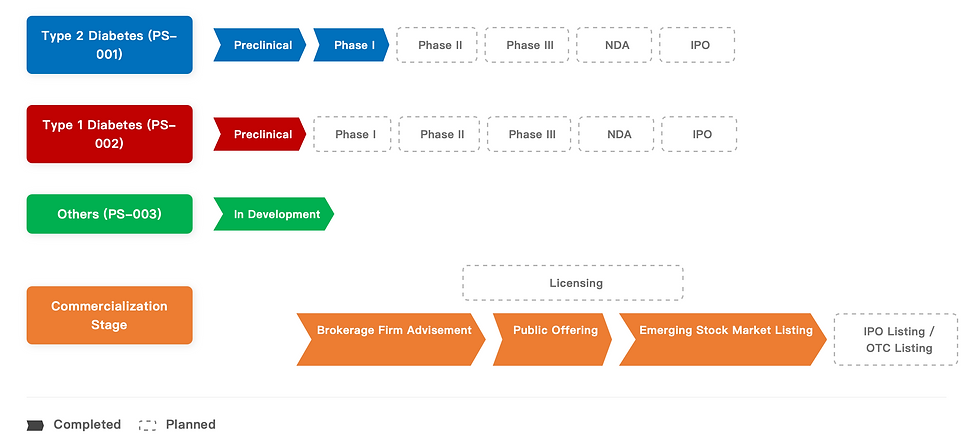
A therapy that supports beta-cell survival or replenishment could become meaningful, although it may ultimately need to work alongside strategies that address the immune system itself. Pharmasaga has also described an earlier program, PS-003, aimed at another therapeutic indication, including oncology in its public company profile. Together, these programs reflect a platform ambition rather than a single-product strategy. The company is exploring whether one mechanistic discovery can generate multiple therapeutic possibilities.
That is how many major biotechnology companies are built. A single target leads to a lead molecule. A lead molecule reveals a broader biological pathway. That pathway creates opportunities across multiple diseases. Over time, the company evolves from developing one drug into building a therapeutic platform. Pharmasaga is still early in that journey. But the architecture of that vision is already visible.
Why This Is a Great Solution
Pharmasaga’s approach is compelling for several reasons.
First, it targets a fundamental component of diabetes progression: beta-cell dysfunction and death. That creates the possibility of addressing the disease more deeply than glucose control alone.
Second, it is based on a novel therapeutic target. A first-in-class mechanism can create significant medical and commercial value because it may offer benefits that existing drug classes cannot.
Third, the company has moved beyond basic discovery. PS-001 has entered human clinical evaluation, meaning the program has already crossed important scientific, manufacturing, regulatory, and operational thresholds.
Fourth, the small-molecule format could support practical administration and global scalability if the therapy ultimately succeeds.
Fifth, the company has a broader pipeline strategy. Its work in type 1 diabetes and other indications suggests that the PDIA4 platform may have applications beyond one form of metabolic disease.
Finally, Pharmasaga is pursuing a problem with extraordinary human impact.
Diabetes affects hundreds of millions of people. It places enormous pressure on patients, families, healthcare systems, employers, and economies. A meaningful disease-modifying therapy could improve lives on a global scale. That is the kind of problem worth taking a major scientific risk to solve.
The Grand Vision: Ending the Lifelong Diabetes Cycle
Pharmasaga’s stated vision is bold. It wants to develop a new-mechanism therapy with the potential to treat and reverse diabetes, ultimately reducing the disease and its complications. That vision reaches far beyond one clinical trial.
Today, a diabetes diagnosis often begins a lifelong cycle. Measure. Manage. Adjust. Monitor. Escalate. Prevent complications. Repeat. Pharmasaga imagines a different future.
A future where treatment begins earlier and protects the cells patients still have.
A future where disease progression is slowed or interrupted.
A future where the body’s own insulin-producing system can be preserved.
A future where diabetes care is designed not only around control, but around recovery.
No company can promise that future before clinical evidence proves it. Biotechnology demands humility because biology frequently surprises even the most experienced researchers. But progress begins with pursuing ideas that once seemed impossible.
Insulin itself transformed type 1 diabetes from a rapidly fatal disease into a manageable chronic condition. New drug classes later reshaped type 2 diabetes care. Continuous glucose monitoring changed how patients understand their bodies. Automated insulin-delivery systems brought treatment closer to physiological regulation. The next transformation may come from restoring or protecting biological function. That is the frontier Pharmasaga is pursuing.
Why the Impact Could Be Enormous
The potential impact of a disease-modifying diabetes drug would be difficult to overstate.
For patients, it could mean less treatment burden, more stable health, and a lower risk of complications.
For families, it could reduce the daily anxiety of managing a chronic disease.
For physicians, it could provide a new therapeutic option aimed at preserving function rather than responding to decline.
For healthcare systems, it could reduce the enormous long-term costs associated with cardiovascular disease, kidney failure, vision loss, neuropathy, amputations, hospitalization, and other diabetes-related complications.
For society, it could improve productivity and quality of life across a massive patient population.
Even a therapy that delays progression rather than fully reverses disease could produce substantial value.
Preserving beta-cell function for several additional years could postpone the need for more intensive treatment. Slowing deterioration could reduce complication risk. Extending the period during which the body continues producing useful insulin could change the patient journey. Biotechnology breakthroughs are rarely all-or-nothing. A drug does not need to completely eliminate diabetes to transform care. It needs to produce a meaningful, durable, clinically validated benefit that current therapies do not provide.
That is the standard Pharmasaga must now meet.
Taiwan’s New Biotechnology Moment
Pharmasaga is also part of a larger story about Taiwan. The world knows Taiwan for semiconductors, electronics, precision manufacturing, and global supply chains. Its technology ecosystem is one of the most important foundations of modern computing. But Taiwan’s innovation story is expanding.
The country is also producing biotechnology companies built around original scientific discoveries, translational research, clinical development, precision medicine, and globally relevant therapeutic platforms.
Pharmasaga represents this evolution. Its technology began with research from Academia Sinica. That discovery was licensed into a startup. The startup advanced it through preclinical development and into human clinical trials. It is now seeking international partnerships, investment, clinical expansion, and global commercialization opportunities. That is the biotechnology value chain in motion.
Scientific discovery alone does not become medicine. It requires founders willing to take risk. It requires intellectual property. It requires capital. It requires toxicology, chemistry, manufacturing, regulation, clinical operations, and years of disciplined execution. Taiwan has deep scientific and medical capabilities. The emergence of companies like Pharmasaga shows how those capabilities can be translated into globally ambitious businesses.
From Taiwan Research to Global Medicine
Pharmasaga’s global strategy is built into the company’s foundation. Diabetes is not a local market. It is a global health crisis. The scientific mechanism must be validated across international standards. Clinical development must satisfy regulators. Manufacturing must meet rigorous quality requirements. Partnerships may span pharmaceutical companies, contract research organizations, hospitals, investors, and research institutions across multiple countries.
Pharmasaga has already pursued regulatory and clinical pathways involving both Taiwan and the United States. It has participated in global biotechnology conferences and has publicly discussed opportunities for licensing, co-development, strategic investment, and international collaboration. This is the same global mindset that has long defined Taiwan’s strongest enterprises.
Build from Taiwan. Validate internationally. Partner globally. Scale into the world.
In biotechnology, that strategy is especially important because the capital requirements and development timelines are substantial. A promising therapy may need global partners to complete late-stage trials, manufacture at commercial scale, secure approvals, and reach patients across markets.
Taiwan provides the scientific foundation. The global biotech ecosystem provides the pathway to scale.
Taiwan’s Global Advantage in Healthcare Innovation
Taiwan’s strength in biotechnology is reinforced by a broader ecosystem. The country has respected research institutions, strong medical centers, advanced engineering talent, experienced manufacturers, and a culture of precision and technical execution.
Those capabilities matter in modern healthcare. Drug development increasingly intersects with diagnostics, data science, advanced manufacturing, AI, digital health, devices, and precision medicine. Taiwan’s existing strengths in technology and manufacturing can support a more integrated healthcare innovation ecosystem.
This creates an opportunity for Taiwan to become known not only for producing the hardware behind modern life, but also for developing the therapies that improve and extend life. Pharmasaga is one example of that possibility.
It begins with a biological discovery.
It becomes a drug candidate.
It enters clinical trials.
And, with enough evidence, capital, and collaboration, it may one day become a treatment used around the world.
Why Silicon Valley Should Pay Attention
Silicon Valley has always been drawn to companies that challenge foundational assumptions.
Pharmasaga is challenging one of the foundational assumptions of diabetes care: that the disease must primarily be managed for life.
The company’s science is still being tested. Its lead program remains in early clinical development. Significant risks remain, and successful drug development is never guaranteed.
But that is precisely why the story matters now.
Breakthrough biotech companies are often most interesting before the outcome is obvious.
Investors, pharmaceutical partners, researchers, clinicians, and healthcare innovators have the opportunity to engage while the platform is still developing and while the company is actively building its global network.
For investors, Pharmasaga represents a first-in-class therapeutic opportunity in a massive global market.
For pharmaceutical companies, it may present licensing or co-development potential.
For researchers, it offers a novel mechanism centered on beta-cell biology.
For healthcare leaders, it provides a glimpse into how diabetes treatment may evolve beyond conventional glucose management.
For patients and families, it represents something even more meaningful:
The possibility of a different future.
Meet Pharmasaga at Taiwan Venture Day in Silicon Valley
Pharmasaga will be one of the breakthrough companies presenting at Taiwan Venture Day in Silicon Valley. Hosted by Sparknify, Taiwan Venture Day brings together 14 high-potential teams from Taiwan working across AI, healthcare, robotics, deep tech, semiconductors, and sustainability.
The event will take place on July 23, 2026, at The Quad Conference Center on Sand Hill Road in Menlo Park.
For investors, it is an opportunity to discover companies emerging from one of the world’s most important innovation ecosystems.
For pharmaceutical and healthcare leaders, it is a chance to meet founders developing new therapeutic approaches and explore potential partnerships.
For scientists and technologists, it is a window into how Taiwan is turning original research into globally ambitious startups.
For founders, it is a gathering of people who understand the difficulty—and the importance—of building technology that can change lives.
At Taiwan Venture Day, attendees will have the opportunity to meet the people behind Pharmasaga, learn more about the science of PDIA4, hear about the clinical progress of PS-001, and understand the company’s vision for the future of diabetes treatment. The next chapter of diabetes care may not be about managing the disease more efficiently. It may be about protecting the body’s ability to fight back. Pharmasaga is working to make that possibility real.


Comments