The Dementia Treatment That Might One Day Look Like a Nasal Spray
The cure for dementia may not arrive as a dramatic machine, a surgical implant, or a futuristic hospital procedure. It may arrive quietly. It may sit on a pharmacy shelf next to allergy medicine.
That is the almost cinematic possibility raised by a new line of brain-aging research from Texas A&M University, where scientists have developed an experimental nasal spray that appears to reverse key features of brain aging in preclinical studies. The therapy does not use a conventional pill. It does not require brain surgery. It does not depend on pumps, implanted devices, or repeated hospital infusions.
Instead, it uses one of the body’s own biological languages: tiny extracellular vesicles carrying microRNAs.

The idea sounds almost too simple. Spray. Deliver. Signal. Repair. But behind that simplicity is a profound shift in how scientists may think about dementia, brain fog, and neurodegeneration. For decades, the aging brain has often been described as a one-way road. Memory declines. Inflammation rises. Neurons lose energy. Families adapt. Caregivers sacrifice. Health systems pay. Society absorbs the cost.
This study suggests something more radical. What if brain aging is not only something to slow? What if parts of it can be reversed?
The Fire Inside the Aging Brain
To understand why this nasal spray matters, we need to understand what it is trying to calm.
The aging brain does not simply “wear out.” Increasingly, scientists see brain aging as an active biological process involving chronic low-grade inflammation. This condition is often called neuroinflammaging.
In the hippocampus — the brain region deeply involved in learning, memory, recognition, and spatial navigation — inflammatory signals can become persistent with age. Microglia, the immune cells of the brain, can shift into a more inflammatory state. Oxidative stress rises. Mitochondria, the tiny power plants inside cells, become less efficient. The brain begins to lose some of the energetic clarity needed to form and retrieve memories.
This matters because dementia is not only a disease of memory. It is a disease of identity, independence, family structure, and economic stability. A person’s ability to remember a face, follow a conversation, recognize a room, or make decisions is tied to the deepest human functions of daily life.
That is why the Texas A&M study feels different from a typical incremental biomedical paper. It points toward a future where brain aging might be treated through biological recalibration.
Not by forcing the brain. By sending it instructions.
The Researchers Behind the Breakthrough
The study was led by Dr. Ashok K. Shetty, a University Distinguished Professor at Texas A&M University’s Naresh K. Vashisht College of Medicine and associate director of the Institute for Regenerative Medicine. Shetty has spent years working at the intersection of neuroscience, regenerative medicine, brain injury, epilepsy, Alzheimer’s disease, Gulf War illness, and stem-cell-derived therapies.
He is not simply studying the brain as an organ that fails. His work is focused on whether the brain can be repaired, protected, and functionally restored.
Working with him were Dr. Leelavathi N. Madhu and Dr. Maheedhar Kodali, senior research scientists in the Shetty Lab at Texas A&M’s Institute for Regenerative Medicine. Their work centers on the molecular machinery of brain aging: inflammation, oxidative stress, mitochondrial dysfunction, extracellular vesicles, microRNAs, and the signaling pathways that shape whether neural tissue declines or recovers.
Kodali has also been recognized by Texas A&M for research excellence, and his broader work includes brain aging, neurogenesis, Gulf War illness, and stem-cell-based approaches to neurological injury. Madhu’s research profile reflects a focus on molecular and cellular medicine, extracellular vesicles, and regenerative neuroscience.
This is important because the nasal spray is not a casual wellness product. It emerges from a lab deeply involved in the biology of brain repair.
What the Nasal Spray Actually Delivers
The therapy is built around extracellular vesicles, often shortened to EVs. EVs are microscopic biological parcels released by cells. They carry molecular cargo — including proteins, lipids, and microRNAs — and help cells communicate with one another. In this study, the vesicles came from human induced pluripotent stem cell-derived neural stem cells, often described as hiPSC-NSC-EVs.
That phrase sounds technical, but the concept is elegant. Human cells are reprogrammed into induced pluripotent stem cells. Those cells are guided toward a neural stem cell identity. The neural stem cells release extracellular vesicles. Those vesicles contain therapeutic signals, including microRNAs. The vesicles are then delivered through the nose. The nose matters.

One of the greatest challenges in brain medicine is the blood-brain barrier, the protective biological wall that prevents many drugs from reaching the brain. It is one reason so many promising neurological therapies fail. A drug may work in a dish. It may work in theory. But if it cannot reach the brain safely and effectively, it cannot become a practical treatment.
Intranasal delivery offers a possible workaround. Instead of circulating through the entire body and trying to cross the blood-brain barrier from the bloodstream, the therapy can move through nasal routes associated with direct access to the brain.
Dr. Maheedhar Kodali described that delivery route as one of the most exciting aspects of the work: “Intranasal delivery allows us to reach, and treat, the brain directly without invasive procedures.”
That sentence captures the potential disruption. If brain therapy can become noninvasive, repeatable, and scalable, the economics of neurodegenerative care could change dramatically.
MicroRNAs: Tiny Molecules, Big Instructions
The most fascinating part of this therapy is not just the spray. It is the message inside.
MicroRNAs are short RNA molecules that help regulate gene expression. They do not behave like a single-target drug in the traditional sense. Instead, they can influence networks of genes and signaling pathways.
Dr. Leelavathi N. Madhu explained it simply: “MicroRNAs act like master regulators. They help modulate and regulate many gene and signaling pathways in the brain.”
That is why microRNAs are so interesting for complex diseases like dementia.
Alzheimer’s disease and age-related cognitive decline are not usually caused by one broken switch. They involve overlapping processes: inflammation, protein accumulation, immune activation, oxidative stress, synaptic dysfunction, mitochondrial decline, vascular changes, and aging-related cellular stress. A single narrow intervention may not be enough.
MicroRNAs offer a different style of therapy. Rather than hammering one target, they may help rebalance entire biological systems.
In the Texas A&M study, the extracellular vesicles influenced major inflammatory pathways, including the NLRP3 inflammasome and the cGAS-STING pathway. These pathways are part of the innate immune system and have become increasingly important in the study of neuroinflammation, aging, and Alzheimer’s disease.
When overactivated, they can help create a toxic inflammatory environment. Reducing that activity could help the brain shift away from chronic immune alarm and toward repair.
The Numbers: What the Study Actually Showed
The study was conducted in aged mice, not humans. That distinction matters. The therapy is promising, but it is not yet a proven dementia treatment for patients. No one should interpret this as an approved cure. The correct interpretation is that this is a strong preclinical signal with meaningful translational potential.
The mice received two intranasal doses of extracellular vesicles. Each dose contained approximately 12 × 10⁹ EVs. The animals were treated at 18 months of age, which is late middle age for mice, and evaluated later at 20.5 months of age.
The study reported several important effects:
First, the therapy reduced signs of oxidative stress in the hippocampus. Oxidative stress is a major biological feature of aging and neurodegeneration. Reducing it may help preserve neuronal function.
Second, it increased protective antioxidant and mitochondrial-related markers. The study described elevated nuclear factor erythroid 2-related factor 2, often known as Nrf2, and superoxide dismutase, both associated with cellular defense against oxidative damage.
Third, the therapy reduced inflammatory signaling. The researchers reported lower levels of mediators and downstream products associated with the NLRP3 inflammasome, p38 MAPK activation, cGAS-STING-IFN-I signaling, and JAK-STAT-related inflammatory pathways.
Fourth, the therapy improved cognition-related behavior. Treated animals performed better in tasks related to recognition memory and location memory, including the ability to recognize familiar objects and detect novelty or environmental changes.
Finally, the effect appeared broadly consistent across male and female mice. In biomedical research, sex differences can complicate translation. A treatment that works in one sex but not the other may face major hurdles. Texas A&M reported that outcomes were similar across both sexes, which strengthens the early case for further development.

Dr. Shetty summarized the larger implication directly: “What we’re showing is brain aging can be reversed, to help people stay mentally sharp, socially engaged and free from age-related decline.”
That is a bold statement. But it is also carefully framed around brain aging, not yet an approved human cure for dementia.
Why This Feels Different From Today’s Alzheimer’s Drugs
The current Alzheimer’s treatment landscape is changing, but it remains difficult. The most visible recent drugs, including anti-amyloid antibody therapies, are designed to clear amyloid plaques or slow disease progression in early Alzheimer’s disease. They represent real progress, but they also come with challenges: high cost, diagnostic complexity, infusion infrastructure, brain imaging requirements, eligibility limits, and safety monitoring.
A nasal spray would belong to a different treatment category. If the therapy eventually works in humans, it could be easier to administer, less dependent on infusion centers, and potentially more scalable across aging populations. It might be used not only after diagnosis, but perhaps one day earlier in the disease process — when neuroinflammation and mitochondrial dysfunction begin to erode cognitive resilience.
That is where the idea becomes economically powerful. A therapy that only slows late-stage disease has one value proposition. A therapy that preserves function earlier, delays institutional care, reduces caregiver burden, and keeps older adults independent longer has a much larger societal value.
In dementia, even small delays matter.
If a therapy could delay cognitive decline by months or years, the impact would ripple outward: fewer emergency room visits, fewer falls, fewer missed medications, fewer caregiver hours, fewer early moves into assisted living or memory care, and fewer families forced to leave the workforce.
The real economic battle in dementia is not only drug pricing. It is time.
Time before diagnosis.
Time before dependency.
Time before full-time care.
Time before a spouse becomes a caregiver.
Time before a family’s savings disappear.
The Economic Stakes Are Enormous
Dementia is one of the most expensive health challenges in the world. In the United States, Alzheimer’s and other dementias are projected to cost hundreds of billions of dollars annually in health care and long-term care. By mid-century, those costs are expected to approach the trillion-dollar range. That figure does not even fully capture the emotional and economic weight of unpaid caregiving.
Families often absorb the hidden costs first. A daughter reduces her work hours. A spouse stops sleeping through the night. An adult child moves closer. Retirement savings become care funds. A home is modified. Paid caregivers are hired. Eventually, memory care may become necessary.
The economic burden is not abstract. It is lived inside households.
Globally, the pressure is even larger. Tens of millions of people already live with dementia, and nearly 10 million new cases occur every year. As populations age, the number of people living with dementia is expected to rise sharply, especially in countries where health systems and family structures may be less prepared for long-term care demands.
That is why a therapy like this, if successfully translated into humans, could become more than a medical product. It could become infrastructure for aging societies. The market would not be limited to Alzheimer’s disease alone. Potential applications could include age-related cognitive decline, mild cognitive impairment, vascular cognitive impairment, post-stroke recovery, traumatic brain injury, and inflammatory brain conditions where microglia, mitochondrial stress, and immune signaling play a role.
Of course, each indication would require separate studies. But the platform logic is broad. A noninvasive brain-delivery system carrying regenerative biological signals could become a new class of neurotherapeutic.
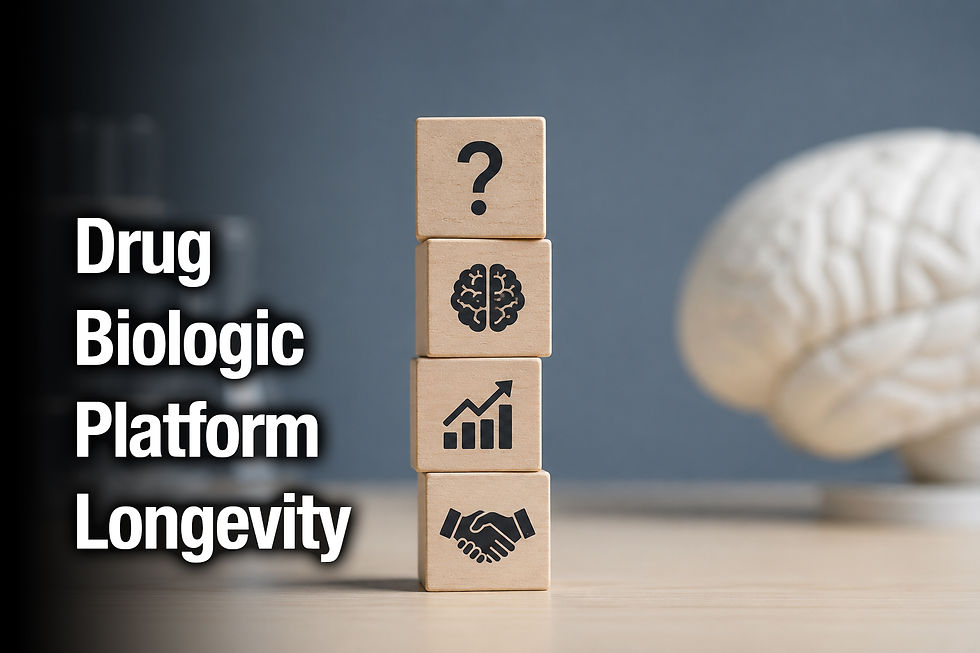
The Business Question: Drug, Biologic, Platform, or Longevity Product?
The commercial future of this therapy will depend on how it is developed. It could be treated as a biologic. It could become part of a regenerative medicine platform. It could be advanced for a specific disease indication, such as early Alzheimer’s disease or mild cognitive impairment. It could also be explored for broader brain-aging prevention, although that would raise far more complex regulatory and ethical questions.
The therapy is also patent-relevant. Texas A&M has indicated that the team has filed a U.S. patent for the approach. That matters because intellectual property can shape whether the technology becomes a university spinout, a licensing deal, a biotech partnership, or a pharmaceutical acquisition target.
From an investor perspective, the opportunity sits at the intersection of several major trends:
aging populations, neurodegenerative disease, RNA medicine, extracellular vesicle therapeutics, regenerative medicine, intranasal drug delivery, and longevity science. Each of those categories already attracts capital. Together, they form a potentially powerful thesis. But the risks are equally real.
Extracellular vesicle manufacturing is complex. Scaling EV production with consistency, purity, potency, and regulatory compliance is not trivial. Human translation may fail even when animal data looks strong. Dosing, immune response, biodistribution, durability, safety, and long-term effects all need to be studied carefully.
There is also the central question of whether the therapy can meaningfully improve human cognition in the messy reality of aging brains, where patients may have amyloid pathology, tau pathology, vascular disease, metabolic disease, inflammation, sleep disruption, hearing loss, and other overlapping risk factors.
A mouse study can show direction. Human trials must show truth.
Why “Nasal Spray” Is More Than a Delivery Detail
The popular headline is easy: a nasal spray could reverse brain aging. But the deeper story is that delivery is destiny. Many neurological drugs fail because they cannot reach the right tissue in the right amount at the right time. The brain is protected for good reasons. But that protection makes treatment incredibly difficult.
An intranasal approach could change the accessibility of brain medicine. Imagine a future where neurodegenerative therapy does not require a specialized infusion center. Imagine older adults receiving a periodic treatment through a nasal route, monitored through blood biomarkers, cognitive tests, digital memory assessments, and brain imaging only when needed. Imagine pairing such a therapy with AI-based early detection, wearable sleep data, hearing interventions, nutrition, and exercise programs.
This would not be a single magic bullet.
It would be a new care model. Aging would become more measurable. Cognitive decline would become more actionable. Brain maintenance would become part of preventive medicine.
That is the truly Sparknify version of this story: not just a drug, but a possible redesign of how society treats aging.
The Human Side of the Science
Dementia is often discussed in numbers: prevalence, incidence, cost, mortality, caregiver hours.
But the real unit of dementia is memory.
A husband who no longer recognizes his wife.
A grandmother who cannot find her way home.
A retired engineer who can still solve old problems but cannot remember whether he took his medication.
A family dinner where someone is physically present but slowly disappearing from the conversation.
That is why the phrase “restore memory” carries so much emotional weight. It is not merely about better test scores. It is about preserving personhood. The Texas A&M study is still early. It is not yet a cure. It is not yet a commercial product. It is not yet something patients can ask their doctor to prescribe.
But it is hopeful because it challenges a fatalistic assumption. Maybe the aging brain is not simply decaying. Maybe it is inflamed, stressed, and underpowered. And maybe, under the right conditions, it can respond.
What Comes Next
The next steps are clear but difficult. Researchers will need to continue safety studies, optimize dosing, understand how long the effects last, confirm mechanisms, and determine whether the therapy can be manufactured consistently. Eventually, human clinical trials would be needed to test safety, tolerability, biomarkers, and cognitive outcomes.
The most likely early human path may not be broad dementia at first. It may begin with a carefully selected group, such as people with mild cognitive impairment, early Alzheimer’s disease, or age-related cognitive decline with measurable inflammatory or biomarker signatures. A successful trial would need to show more than a beautiful mechanism. It would need to show real-world cognitive benefit, safety, and practical feasibility.
Still, the potential is enormous. A two-dose nasal spray that calms brain inflammation, improves mitochondrial function, and supports memory would represent a very different future from the one families face today. It would mean that the next generation of brain therapy may not look like science fiction.
It may look ordinary.
A small bottle.
A biological signal.
A quiet attempt to give neurons their spark back.
And perhaps, one day, a world where dementia is not accepted as the inevitable cost of growing old.




Comments