The Next Big Adtech Frontier: Why Investors Should Pay Attention to AI-Native Advertising
For investors searching for the next major shift in digital advertising, the breakthrough is already here—and it’s unfolding in a way that most consumers haven’t even realized yet. Global advertising spend is expected to exceed $1.1 trillion in 2025, with nearly three-quarters of that already flowing into digital channels. Within that enormous pool, a brand-new layer is emerging: ads that no longer sit on web pages or in social feeds, but instead live inside conversations with artificial intelligence. This category, known as AI-native advertising, is redefining how products and services are presented to people, creating a market opportunity that rivals the early days of search and social advertising (with credible forecasts suggesting conversational ad spend alone could mature into a $10–30 billion segment by the end of the decade, depending on adoption rates).

While ordinary users may find it shocking—or even unsettling—that ads can now slip seamlessly into a chat with an AI assistant, for investors, the story is different. It signals the rise of a brand-new monetization layer in the rapidly expanding AI ecosystem. Just as Google built an empire on search ads and Facebook did the same with social feeds, startups pioneering AI-native ads are laying the foundation for the next billion-dollar advertising rails.
From Pop-Ups to Pop-Ins: A Shift in Strategy
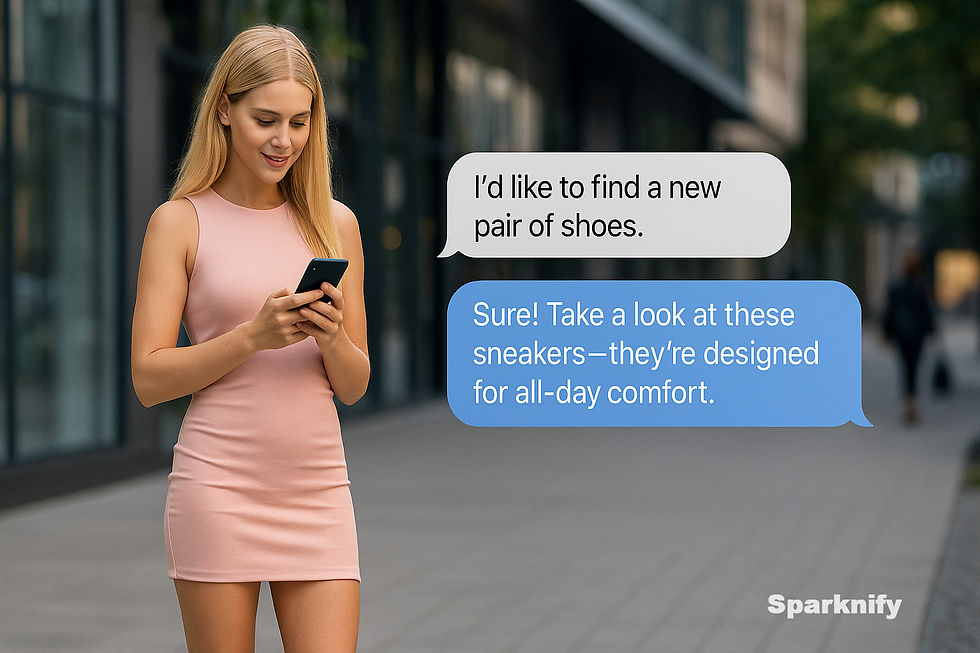
Imagine you’re chatting with an AI assistant about what to wear to a wedding. Instead of a list of general tips, the AI casually suggests a navy suit from a specific retailer, or shows you a dress available on an e-commerce platform. The suggestion doesn’t come in the form of a banner or a sponsored link—it feels like part of the conversation itself.
That’s not hypothetical anymore. A startup called Nexad has already raised $6 million to build this new layer of advertising. Unlike traditional adtech companies, Nexad isn’t fighting for space on your web browser. Instead, it’s embedding ads directly into chat platforms powered by artificial intelligence. Already, the company has integrated with seven AI partners—including iAsk and Dippy AI—reaching more than 30 million users.
To many people, this will feel like a shocking leap forward. After all, ads have always been visible, separate, and easy to recognize. With AI-native advertising, the line between “helpful suggestion” and “sponsored content” begins to blur.
How It Works Behind the Scenes
What makes this so revolutionary is the mechanism powering it. Instead of relying on cookies or tracking your browsing history, Nexad’s system listens to the conversation you’re already having with an AI. Using the same large language models that make these assistants so responsive—systems from Google’s Gemini, OpenAI, Anthropic, and Meta’s LLaMA—the platform identifies the context of your request in real time.
From there, the system inserts an ad that fits the moment. If you’re talking about travel, the AI might mention a hotel booking partner. If you’re asking about cooking, it might suggest a brand of olive oil or a subscription meal service. The ads are designed to feel natural, almost conversational, rather than interruptive.
Each interaction feeds into what Nexad describes as a flywheel model. When you engage with an ad, whether by clicking a link or making a purchase, the system learns what worked. That feedback loops back into the AI, refining the targeting for future conversations. Over time, the system becomes sharper, more accurate, and more profitable for advertisers.
Why Investors Are Excited
From an investor’s perspective, this isn’t just another ad product—it’s an entirely new territory. Traditional ad networks are being disrupted by stricter privacy rules and the death of the cookie. Apple has limited data tracking on iPhones. Google has delayed but still intends to phase out third-party cookies on Chrome. Regulators in the U.S. and Europe are scrutinizing targeted advertising more closely than ever.
AI-native ads sidestep all of that. They don’t need to track you across the web. Instead, they’re contextual, responding to what you’re saying in the moment. That means they can deliver highly relevant recommendations without violating new privacy norms.
It’s no surprise that heavy-hitting venture funds like Andreessen Horowitz’s Speedrun program, Prosus Ventures, and Sequoia Capital’s Scout Fund have backed Nexad. The appeal is obvious: the opportunity to own the advertising rails of the AI era, much as Google dominated search ads or Facebook dominated social ads in the past.
For investors who share this vision and are eager to stay at the forefront of similar innovations, this moment represents a unique opening. By connecting with Sparknify's ecosystems focused on advanced adtech, investors can remain closely informed about upcoming deal flows, pilot programs, and breakthrough ventures. In a space where first-mover advantage can define entire markets, being part of the conversation early can prove invaluable.
Why This Wasn’t Possible Before
The key reason this kind of advertising couldn’t exist until now is simple: the technology wasn’t ready. Until large language models matured, it wasn’t feasible to insert ads in a way that felt natural, contextual, and truly conversational. An older chatbot might have offered clumsy or irrelevant responses, but modern AI can understand nuance, tone, and intent.
This leap in natural language processing makes it possible for ads to appear in a way that doesn’t feel forced. For the first time, advertising can flow like a conversation—something humans are wired to trust and respond to. That subtle psychological shift makes AI-native ads far more powerful than anything that came before.
A Glimpse Into the Future
The implications are staggering. Instead of passively scrolling past ads on a webpage, you may soon find yourself casually chatting with them. The AI that recommends a product may also be the one helping you plan your week, tutor your child, or draft your business emails.
This blending of utility and commerce is precisely what excites investors—and what unsettles many privacy advocates. For consumers, the change might feel invisible at first, but it represents a fundamental shift: advertising is no longer something you can mute, skip, or block. It becomes part of the flow of conversation.
Investor Takeaway
For investors, the scale of the opportunity is hard to ignore. Global ad spend is already a $1.1 trillion market, and digital is projected to account for more than 80% of that total by 2030. If conversational AI surfaces capture even a modest 1–3% share of digital budgets, that translates to a $11–34 billion annual revenue stream by the end of the decade—with upside toward $50 billion if adoption accelerates.
The supporting infrastructure is also maturing quickly: conversational AI software and services are projected to triple in value between 2025 and 2030, ensuring that the rails for this kind of monetization will be in place. The open question is not whether conversational ads will exist, but who will own the chokepoints—from distribution partnerships to SDK integrations to attribution standards.
Early capital in this space is effectively buying an option on the future backbone of digital commerce. Investors who align now with the teams building these rails stand to benefit disproportionately as spend begins to migrate from search, social, and retail media into conversational contexts. The consumer side may still be waking up to the reality of ads inside AI conversations—but the investment signal is already flashing green.


Comments