Altman Calls PC RAM a Waste as Carmakers Fight for Older Memory Chips
OpenAI CEO Sam Altman said on October 29 that DRAM in personal computers is a "quite terrible" use of the world's limited memory. Ford put memory inside a $2 billion cost headwind the same week. With AI data centers vying for the very same chips, cars have joined laptops in the competition.
Sam Altman made the remark on John Collison's Cheeky Pint podcast on October 29, 2026.
Ford expects commodities, memory and logistics to cost about $2 billion more than last year.
SK hynix told investors its DRAM and HBM supply is effectively sold out through 2029.
S&P Global Mobility expects older automotive DRAM to dry up from 2028 regardless of price.
All ten of the top cockpit designs planned for 2028 still rely on DDR4 or LPDDR4 memory.

What did Sam Altman say about the RAM in your PC?
Memory is squandered when millions of people keep a private stock of it on their desks, in Altman's view. He put the argument to Stripe cofounder John Collison in an interview for the October 29 installment of Collison's podcast, Cheeky Pint.
In Altman's reckoning, the memory in a personal computer is put to work about 5 percent of the time; he did not provide figures to back that up. A shared data center can have those same chips running all day and night.
Altman, OpenAI's CEO, was plain about it on Cheeky Pint:
"It's quite terrible to have everybody have a bunch of the world's limited supply of DRAM sitting in their own computer."
Collison had a question for him from the market side of things. With prices at these levels, what is stopping new suppliers from coming in and putting up factories?
"I think the invisible hand is failing right now."
That was Altman, OpenAI's chief executive, answering on the same Cheeky Pint episode. A producer will be wary after previous busts, he said, since a memory maker would put in $20 billion in capacity just to get $19 billion in return. Word of the clip got around fast. PC builders and gamers who have seen memory kit prices go through the roof did not take it well.
Why does a PC argument matter to carmakers?
The memory Altman is looking to have pooled in data centers is the very same commodity that carmakers require for each new dashboard. Micron has projected that the typical new vehicle will be equipped with some 278 gigabytes of DRAM and NAND this year, a rise from the 90 gigabytes seen in 2023.
This kind of memory is what powers digital clusters and infotainment screens as well as driver assistance and the central computers which are now in control of an entire vehicle. A car is not in a position to call on cloud memory at the moment it has to brake; the computing must be done on board without exception.
On the October 28 earnings call, Ford CEO Jim Farley put a figure on the bill:
"We currently expect commodities, memory and logistics costs to represent a year-over-year headwind of about $2 billion."
General Motors has put forward a warning of as much as $2 billion in added costs for the year, driven in part by DRAM. Stellantis CEO Antonio Filosa made it clear to analysts that the steeper prices for memory will be felt across the industry and not just by one firm. The automotive sector is but a small fraction of worldwide DRAM demand, leaving carmakers with little sway over how suppliers apportion their output.

Memory makers say the shortage will last for years
The top suppliers are telling investors that a constricted supply is to be expected from here on in. On October 28 SK hynix told its investors that its DRAM and HBM production is effectively sold out through 2029, with 14 of its customers bound by long-term deals.
Then on October 29 Samsung put forward an operating profit for the third quarter of 107.4 trillion won (some $80 billion), a record figure. The memory side of the business was responsible for nearly all of it, with HBM4 for AI accelerators and server SSDs at the forefront.
In its third quarter earnings outlook, Samsung was more direct about what to anticipate in the coming year:
"AI-driven demand will far exceed the industry supply in comparison with 2026."
Both companies will be channeling more of their output into HBM and high-speed server DDR5, the most lucrative products they have. It is not the kind of memory one finds in most cars.
The real cliff is old memory, not new memory
For cars, the more difficult issue is the phasing out of the oldest memory generations. Jeremie Bouchaud, an analyst with S&P Global Mobility, expects automotive DDR4 and LPDDR4 to stay in supply until the end of 2027. From 2028, he expects it to run out, price aside.
It is a schedule that runs counter to what is already on the drawing board for vehicles. S&P Global Mobility forecasts that all ten top cockpit designs slated for 2028 are built around DDR4 or LPDDR4, as are eight of the top ten driver assistance designs. As for cost, automotive LPDDR4 was some 70 percent dearer by January than a year before.
Change does not happen quickly in this sector. A part cannot simply be swapped, since automotive memory has to be qualified for heat, cold and vibration, a validation process that can take months. With the three biggest manufacturers putting out some 88 percent of automotive DRAM, any product decision is felt throughout the industry.
Then there is the AI demand right at home. On October 25 Sparknify reported that San Jose cleared NVIDIA's chip lab at 300 Holger Way to operate as a data center drawing up to 20 megawatts. The city already counted roughly 20 such centers in operation and six more being built.
Where Taiwan's specialty memory makers fit
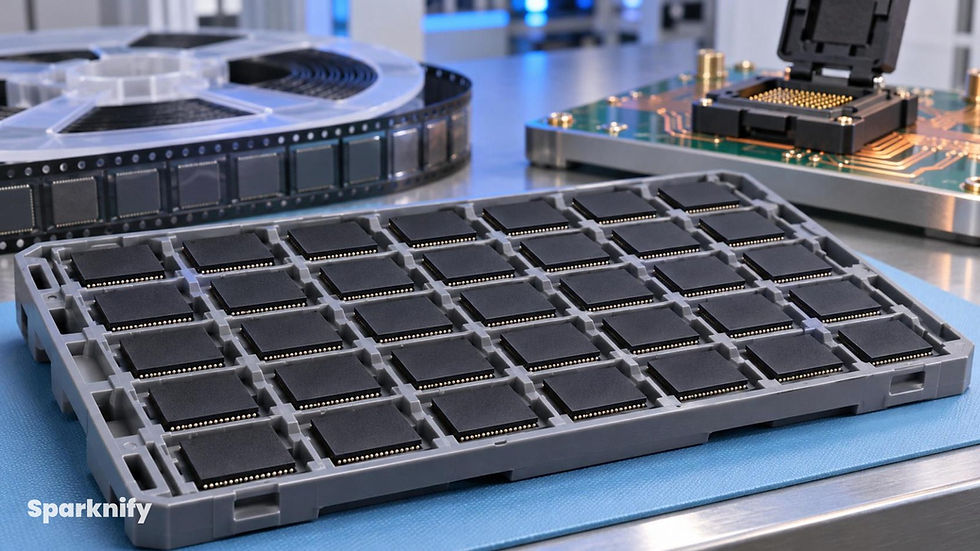
Memory makers that have not forsaken legacy DRAM find themselves in a better position these days. Case in point is ESMT, or Elite Semiconductor Microelectronics Technology. The fabless company in Hsinchu, Taiwan is listed on the Taiwan Stock Exchange. Its range runs from SDRAM to DDR4 and from LPDDR to LPDDR4X, plus NOR flash and SLC NAND.
All of ESMT's products are made in Taiwan. For the automotive sector it offers AEC-Q100 qualified parts and holds ISO 26262 certification, and it typically commits to seven to ten years of supply. That lifecycle is more akin to a vehicle program than to anything one would see for consumer memory.
The company is also making a play on the notion that AI will not be confined to the cloud. With its aiPIM platform, ESMT stacks DRAM on an AI logic die that fits existing LPDDR4 and LPDDR5 interfaces. It is aimed at generative models of under 7 billion parameters that run on the device.
At CES 2027, ESMT can be found at Booth B in the Taiwan Mobility Pavilion, LVCC West Hall, booth #4577, January 6 through 9. Tier 1 suppliers and automakers holding end-of-life notices for DDR4 or LPDDR4 can request a meeting with the ESMT team ahead of the show.
Will AI or cars get the memory over the next three years?
How much memory is put into production, and for whom, will be the determining factor in the coming three years. According to Altman, memory has a greater role to play in a shared data center than on an office desk. Should AI demand continue its upward trajectory as Samsung and SK hynix forecast, capacity will be channeled into HBM and server DRAM. Carmakers would be left with higher costs and a smaller pool of suppliers for the components they need.
The year 2028 presents the greatest risk, because its vehicles were designed with DDR4 and LPDDR4 in mind. Reworking a cockpit or driver assistance computer is an expensive and drawn out process. A last-time buy that is not made can bring a line to a halt, and a belated redesign can set a launch back. On top of that, buyers may have to accept fewer features or pay more to make up for the added cost of memory.
There is genuine opportunity as well. With Taiwan's specialty producers and newcomers like China's CXMT putting more automotive-grade DRAM on the market, long standing supply deals could be as much of a draw as speed. An automaker with a long term contract or second source in place will be better positioned to keep sticker prices and features from fluctuating. Then there is on-device AI, which might drive up memory requirements in the car instead of offloading them to the cloud.
Not everyone is convinced by Altman's reasoning. Detractors point to the value of local computing for offline use and privacy, and to not being beholden to a single provider; a vehicle that has to do its own thinking in a tunnel is the obvious example. Proponents counter that most memory sits unused most of the time, so it makes sense to put a scarce resource to work in a shared facility. The memory manufacturers, for their part, are cautious about overbuilding given the boom and bust cycles of their trade.
Five things over the next year will show which way this goes.
Formal end-of-life dates for automotive DDR4 from SK hynix, Samsung or Micron during 2027.
Ford, GM and Stellantis memory cost guidance in their full-year results early next year.
Automaker announcements of LPDDR5 redesigns for cockpit and ADAS programs due in 2028.
Whether CXMT's automotive-grade DRAM ramp reaches buyers outside China by 2027.
New long-term supply deals with legacy memory makers announced around CES 2027 in January.
The fight over who deserves the world's memory has moved from data centers and desktops into the dashboard.
Subscribe to Sparknify for tech news and the people behind it.
Questions & Answers
Q1: If Sam Altman is correct in saying PC memory is a waste, should we expect new laptops with less RAM or a greater dependence on the cloud?
Not in all cases. Altman has argued that shared data centers are more efficient with memory, but a buyer who wants control and offline work will still want a good local machine. Anduril and Qualcomm's BlueChip laptop is aimed at government and defense users with on-device AI, but there is no word yet on its memory specs.
Q2: I build perception systems for robots and cars that rely heavily on camera data. Does the DRAM squeeze present a concern for my supply and costs?
Yes, and especially for DDR4 or LPDDR4 designs. S&P Global Mobility expects that older memory to dry up from 2028, and automotive LPDDR4 prices were some 70 percent higher in January. Systems that have to handle many cameras call for more memory, as the camera-only sensor fight in cars and robots shows.
Q3: What is the way for automakers and Tier 1 suppliers to get together with ESMT at CES 2027 over long-term DDR4 and LPDDR4 supply?
ESMT can be found in the Taiwan Mobility Pavilion of the LVCC West Hall (Booth B, #4577) between January 6 and 9, 2027. The Hsinchu firm offers AEC-Q100 parts and will normally make a seven to ten year supply commitment. Teams can request a meeting with the ESMT team at sparknify.com/esmt-en ahead of the show.



Comments