A Cancer Vaccine Built for One Patient Cuts Melanoma Relapse Risk by 42%
Most cancer drugs are produced in one form and sent out to everyone. On Thursday, however, Moderna and Merck put on display the possibilities of a cancer therapy built from the ground up for an individual patient. A Phase 3 trial involving 1,137 people with high-risk melanoma found that when intismeran autogene, a personalized mRNA vaccine, is used in conjunction with the immunotherapy Keytruda, it reduces the chance of the cancer coming back or of death by 42 percent versus Keytruda by itself. Merck calls it the first Phase 3 study to show a clinically meaningful improvement over Keytruda after melanoma surgery. And yet on the same day, Moderna's stock took a sharp drop.

The trial results show a 42 percent drop in risk
The study, INTerpath-001, followed adults with stage IIB to IV melanoma after surgery had completely removed the tumor. On paper they are cancer free, yet the risk remains high given that the majority of recurrences occur in the first two years. Patients were randomized two to one to the vaccine plus Keytruda or a placebo plus Keytruda. Keytruda was given for roughly a year, while the vaccine was given every three weeks for as many as nine doses.
After a median follow-up of 24.6 months, 82.2 percent of those on the combination were alive and without recurrence at two years, as against 70.0 percent for Keytruda by itself. The headline figure of a 42 percent reduction in risk comes from a hazard ratio of 0.58. The chance of the cancer making its way to distant organs, or of death, was down 38 percent, with two year rates of 88.5 percent versus 80.2 percent.
The timing is telling. For the first six months, there was no difference between the groups. But when the vaccine series was done the divide appeared, and a prespecified analysis of the period after six months revealed a 58 percent drop in risk, as one would expect of a vaccine while the immune system gets to know what it is up against.
While the companies report a favorable trend, the overall survival numbers are not yet mature. As for side effects, they were largely of the sort associated with vaccines: 52.2 percent of the combination group ran a fever, 51.0 percent had pain at the injection site and 38.5 percent were fatigued. Grade 3 to 5 treatment related side effects were nearly equal on both sides, at 14.2 percent and 13.4 percent. The New England Journal of Medicine has accepted the results, and they will be presented in full at the ESMO Congress 2026 in Madrid during Saturday's Presidential Symposium.
How you build a vaccine for one person
Intismeran is not a vaccine as one would think of the flu shot. It is not for cancer prevention, but rather a treatment for a cancer that is already present. It works by instructing the immune system to identify the particular mutations in an individual's tumor.
The procedure starts with a sample of the tumor and some normal tissue, usually blood. After both are sequenced, a comparison shows which mutations are exclusive to the cancer. Software is used to single out the mutated protein fragments, or neoantigens, most apt to elicit a robust response from the immune system. The resulting dose is a synthetic mRNA encoding as many as 34 of these neoantigens. After the injection, the body's own cells make the fragments, so that T cells can be put on the trail of anything bearing them.
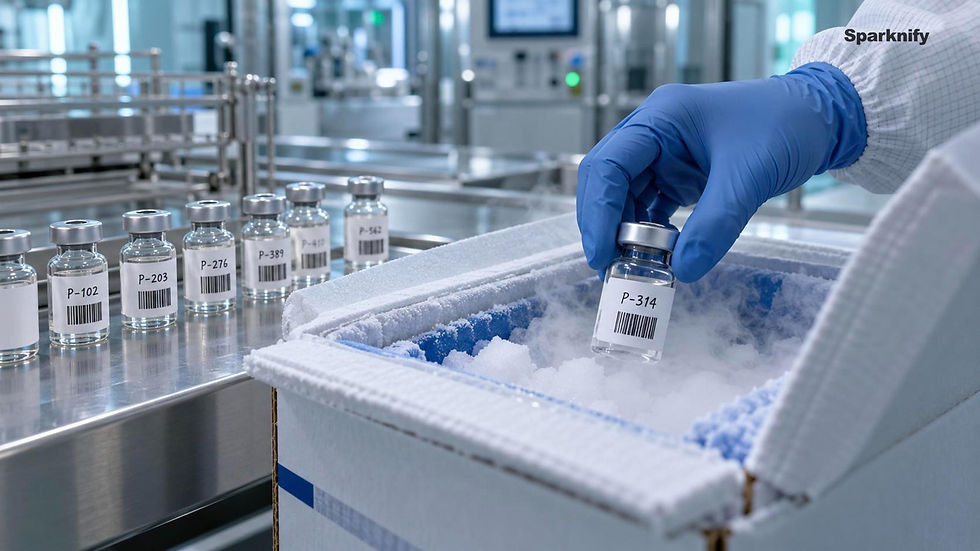
To a reader from Silicon Valley, it is much like build to order manufacturing. Every patient is issued a unique design file, production run and delivery. The sequencing, the computational side and the rapid turnaround on the mRNA all have to be in sync, on a clock, for each person.
"From the beginning, we believed mRNA technology could make it possible to develop cancer treatments uniquely matched to each patient's tumor," Moderna CEO Stéphane Bancel said in the companies' joint announcement.
Professor Georgina Long of Melanoma Institute Australia, the study's principal investigator, framed it as a shift in how oncology is organized. "For decades, cancer treatment has largely been defined by where a tumor originates in the body," she said in the same release.
Why good data still sank the stock
The numbers came to light in an unusual way. The details surfaced online on Thursday morning, ahead of the conference embargo being lifted, and the companies made the full data available in the afternoon.
Moderna stock was down more than 15 percent for the day. Context matters: since August the share price had been on a steep climb after the companies announced the trial had achieved its main goal but did not provide figures. A smaller Phase 2b study done previously had pointed to a more pronounced effect, roughly a 49 percent reduction in the risk of recurrence or death, and some investors had factored in a similar outcome.
As for the 0.58 figure, analysts were divided on whether it was enough. Several saw the selloff as a response to overblown expectations, not any shortcoming in the medicine. Some called the result clinically meaningful and likely approvable. Put simply, the science advanced even as the stock went backward.
The question of whether timing alone could match it
Value is the subject of the most pointed debate. Keytruda is already standard care after melanoma surgery, and physicians have at their disposal a far less costly alternative to a bespoke vaccine, namely giving Keytruda before as well as after the operation.
The SWOG S1801 trial put that method to the test and reported a 42 percent cut in the risk of events for patients with stage IIIB to IV melanoma who started immunotherapy before their operation. One cannot make a direct comparison of the figures from the two trials, since they enrolled different patients and measured outcomes in a somewhat different way. But the common ground does pose an obvious question for payers and skeptics: what additional advantage does a personalized vaccine bring beyond the best use of the drugs already in doctors' hands?
Then there are the first six months to consider. The trial showed no benefit for those whose cancer came back early, presumably because the vaccine had not yet finished training the immune system.
The Bay Area tried this before
The story of personalized cancer vaccines has been a complicated one in this part of the country. Gritstone bio, the Emeryville firm behind individualized neoantigen vaccines, filed for bankruptcy in 2024. Genentech of South San Francisco has been working with BioNTech on a competing personalized mRNA method since 2016, but in August BioNTech put an end to a Phase 2 trial of that therapy in colorectal cancer when it did not prove beneficial.
With melanoma, the technology is on friendlier ground. The disease is rife with mutations and responds to immunotherapy, affording a vaccine more targets and a stronger partner drug. In that sense INTerpath-001 is a real milestone, yet it is also a reminder that what works for one tumor type will not necessarily work for another. Merck and Moderna have nine Phase 2 and Phase 3 trials in progress, including three Phase 3 studies in non small cell lung cancer, plus studies in kidney, bladder, gastric and pancreatic cancers. Details are listed on Moderna's pipeline page.

Will a vaccine made for one patient become routine cancer care?
The near term path looks clear. The companies say they are already engaging with regulators, and some analysts expect a U.S. decision could come in 2027. With approval, intismeran would be the market's first individualized mRNA cancer therapy, making good on a decade of talk about personalized medicine with something a doctor can actually prescribe. For founders and investors in the Bay Area, the implications go well past melanoma. A commercial model that works would validate the whole stack behind it: tumor sequencing, neoantigen prediction software, rapid mRNA manufacturing and the logistics that tie them together. Startups with faster sequencing, better immune prediction models or more compact manufacturing would have a proven customer overnight.
The concerns are just as real. Price is the first. Each dose is a one-off production run, and no one has put a figure on the cost of a full course. Turnaround time is the second; while a patient waits for a bespoke vaccine, the cancer does not. Overall survival is third on the list, because a lower recurrence rate is welcome but the companies must still show that patients live longer. Access is the fourth. A therapy that relies on tumor sequencing, specialized labs and narrow shipping windows could easily end up concentrated at big academic cancer centers.
There is a policy element as well. In the wake of the pandemic, mRNA has taken on a political edge in the United States, and in 2025 federal health officials canceled roughly $500 million in mRNA vaccine projects for respiratory viruses. Proponents say cancer is a different use with a different risk profile, and that the country ought to be at the forefront of this sort of innovation. Critics of the broader mRNA push argue for more caution and more long term data. It will be up to regulators to judge this application on its own terms.
The scientific side of the debate is narrower but more pointed. Skeptics argue that giving existing immunotherapy before surgery may offer much of the same benefit for far less, and that the vaccine has not been tested against that approach head to head. Supporters counter that the two are not mutually exclusive and could be combined, with the strongest benefit showing up once the vaccine series is done.
What to watch: the Madrid presentation on Saturday and the paper in the New England Journal of Medicine, how the overall survival numbers mature, when a formal filing with the FDA is made, the first readouts from kidney and lung cancer trials, and any word on pricing and manufacturing turnaround.
Earlier this week, Sparknify reported on the FDA's green light for GSK's Hibsago, an RNA targeting drug intended to provide lasting control of a disease as an alternative to treating it for life. Viewed together, the two stories show RNA medicines leaving the laboratory for some of the more intractable problems in medicine.
A cancer drug made to order for a single patient has now stood up to a large and exacting trial, and what remains to be seen is whether it can be put within reach of everyone who needs it.
Subscribe to Sparknify for Silicon Valley tech news and the people behind it.


Comments