Toyota’s New “Bubble Car” Might Change How Kids Get Around Forever
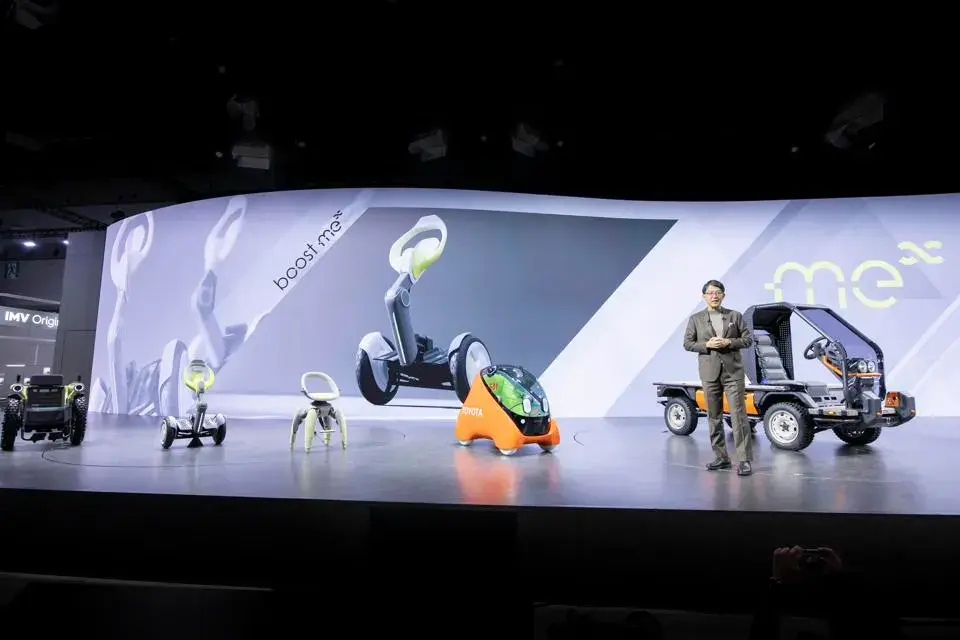
At the Japan Mobility Show 2025, Toyota showcased a prototype that feels like it walked out of a near-future storybook: Mobi (also shown as “Kids Mobi”)—a closed, bubble-like electric pod designed specifically for children, built around the bold idea that a kid could ride in a vehicle that drives autonomously without an adult onboard.

Inside this round little capsule is a surprisingly serious proposition: not just autonomy, but autonomy tailored to a very specific passenger purpose—child mobility—wrapped in a comfort-first interior and an AI companion. Toyota’s concept includes an onboard assistant called “UX Friend,” designed to talk with the child, offer friendly guidance, and keep them engaged during the ride, while sensors and cameras around the vehicle detect motion and obstacles to support the autonomous driving system.
Whether or not Mobi ever hits public roads, it’s a sharp signal of where autonomous vehicles are heading next: away from “self-driving cars” as a single category, and toward a family of purpose-built autonomous passenger machines—each designed around who is riding, why they’re riding, and what kind of experience makes them feel safe.
This is the new frontier: autonomous passenger vehicles developed not just for driving, but for living.

From “Self-Driving Car” to “Autonomous Passenger Purpose”
For years, the autonomy narrative was dominated by a simple substitution: take an existing car, remove (or reduce) the driver, and let software do the rest. That approach is still alive—many deployments today use modified consumer vehicles.
But the deeper shift is this: when you remove the driver, you remove the product’s center of gravity. Suddenly, the passenger experience becomes the main event.
That’s why we’re seeing a rise in vehicles that aren’t trying to be “cars” in the old sense. They’re closer to pods, shuttles, micro-cabins, and mobile rooms—built around:
Non-drivers (kids, seniors, people without licenses, tourists)
Low-speed or geofenced environments (campuses, parks, private communities)
Safety + reassurance UX (friendly exterior cues, interior monitoring, conversational AI)
Service integration (summon-by-app, fleet management, remote assistance, route constraints)
Toyota’s Kids Mobi fits this pattern perfectly: it’s not a scaled-down Corolla. It’s a different species.
Photo courtesy of Toyota Photo courtesy of Toyota Photo courtesy of Toyota
Why Toyota’s “Kids Mobi” Is More Than a Cute Concept
Toyota’s prototype design choices tell you what the engineering team believes the real problem is.
1) Safety has to feel like safety
Kids Mobi is intentionally enclosed and pod-like, with a canopy-style entry and a cozy interior that’s described as featuring a fuzzy, comfort-forward seat—less “vehicle cabin,” more “protective cocoon.”
That matters because autonomous acceptance is emotional as much as rational—especially for parents.
2) The vehicle is designed to be legible to humans
The concept uses expressive cues—like animated “eyes”—to make the machine feel aware and non-threatening. Multiple reports describe the playful character-like design, including sensor “ears” and animated lighting.
In autonomy, human trust is part of the safety stack.
3) UX Friend is a preview of “in-vehicle AI companionship”
Toyota’s UX Friend isn’t just a gimmick. It points to a future where autonomy is paired with a conversational layer that can:
narrate what’s happening (“we’re stopping because someone is crossing”)
guide behavior (“please stay seated”)
reduce anxiety (especially for children or first-time riders)
create engagement instead of boredom or panic
And importantly: it creates a relationship between passenger and machine—something we rarely discussed in the early autonomy era.
4) This is autonomy as mobility access, aligned with Toyota’s “Mobility for All” vision
Toyota has long used “Mobility for All” language to describe universal, inclusive mobility options.
Kids Mobi extends that philosophy to an extreme edge case: a passenger who legally can’t drive and can’t be expected to manage risk.
Photo courtesy of Toyota Photo courtesy of Toyota Photo courtesy of Toyota
The Hard Part Isn’t Driving—It’s “No Adult Supervision”
Let’s be blunt: child-only autonomy is one of the most difficult autonomy product categories imaginable, even if it’s geofenced and low-speed.

Why?
Because the system must handle two safety problems at once:
Driving safely in the external world (road users, obstacles, edge cases)
Managing safety inside the cabin (seatbelts, panic behavior, distractions, medical issues, bullying if multiple kids, etc.)
Even today’s robotaxi deployments commonly start with constraints—limited areas, trained operators, careful rollout—and still face intense scrutiny after incidents. For example, Zoox has faced U.S. safety investigation attention following crashes involving its autonomous system, underscoring how tightly regulators watch real-world AV behavior.
Toyota has not announced real-world public road testing timelines for Kids Mobi with children in everyday traffic, and coverage frequently notes the gap between prototype reveal and regulatory-ready deployment.
So if Kids Mobi ever becomes real, the first plausible environments won’t be chaotic city streets. Think: campuses, parks, theme destinations, controlled neighborhoods, dedicated lanes—places where infrastructure can “meet the vehicle halfway.”
Two Startups Building Purpose-Built Autonomous Passenger Vehicles
Toyota is a giant, but the “purpose-built passenger autonomy” push is also being led by startups—especially those who treat the vehicle as a service platform, not a privately owned car.
1) Zoox — the robotaxi designed without a driver seat
Zoox (owned by Amazon) has built a purpose-built robotaxi that’s explicitly “for riders, not drivers,” including designs that remove traditional driving controls like steering wheels and pedals.
Why this matters for “unique passenger purpose”:

When there is no driver, the cabin becomes a shared micro-lounge
The design can prioritize accessibility, symmetry, and rider comfort
The vehicle experience feels less like “a car that’s missing a driver,” and more like “a new kind of transit room”
Zoox’s trajectory also illustrates the reality check of autonomy: pushing into public roads means pushing into regulation, incident reporting, and continuous scrutiny.
2) May Mobility — autonomy as a practical shuttle + ride-hail layer
May Mobility is another strong example of autonomy built around specific passenger contexts: shuttles, fixed routes, first/last mile, and controlled deployments.
In 2025, Lyft and May Mobility launched a pilot where riders could hail May Mobility’s retrofitted autonomous vehicles through the Lyft app in Atlanta—starting small, with trained in-vehicle operators onboard, and using a sensor suite that includes lidar, radar, and cameras.

May Mobility also lists active deployments across multiple locations and contexts (including driverless operations in Peachtree Corners, GA, and other structured environments), reinforcing the reality that autonomy often scales via bounded problems first.
If Zoox represents the “new vehicle form factor” revolution, May Mobility represents the “deployment reality” revolution: autonomy succeeds when it’s paired with the right operations model, routes, and service design.
The Bigger Trend: Autonomous Vehicles as “Characters,” Not Just Machines
Kids Mobi is part of a broader evolution: the vehicle is becoming a social actor.
It signals intention (lights, motion language, displays)
It reassures passengers (voice, narration, coaching)
It participates in conversation (UX Friend-style assistants)
It enforces norms (seatbelt checks, start permissions, remote supervision)
In other words: we’re not only teaching cars to drive.
We’re teaching them to behave.
And for unique passenger purposes—kids, seniors, tourists, people with disabilities—behavior matters as much as technical competence.
Sparknify’s Human vs. AI Lens: Autonomy Is a Real-World Turing Test
At Sparknify, our Human vs. AI discussions often center on a deceptively simple question:
When does AI stop being a tool—and start being a participant?
A self-driving system isn’t just optimizing a route. It’s making moment-to-moment decisions in shared human space: yielding, merging, predicting intent, negotiating uncertainty. Add an in-cabin companion like UX Friend, and now AI is also shaping the passenger’s emotions, choices, and trust.
That’s why autonomous passenger mobility is one of the most powerful “Human vs. AI” arenas:
The stakes are physical.
The feedback loop is immediate.
Trust is earned (or lost) in seconds.
If you’re following Sparknify’s exploration of this frontier through art, film, and community debate, you’ll recognize the same themes playing out on wheels: authorship, responsibility, perception, and the future of human agency.
A Future World Shaped by “Passenger-Specific Autonomy”
So what happens if concepts like Kids Mobi become real?
Here are a few plausible futures—some exciting, some unsettling, all worth debating.
1) Childhood independence returns… but it’s mediated by fleets
In many places, kids’ independent mobility has shrunk over decades due to traffic danger and urban design. A safe autonomous micro-pod could restore freedom—but through a managed mobility system, not through walking or biking. That’s a big cultural shift.
2) Cities get redesigned for “low-speed autonomy lanes”
If kid pods, senior pods, and micro-shuttles proliferate, cities may carve out dedicated corridors—protected routes where autonomy can be extremely reliable. The “sidewalk” might get a new neighbor: the autonomy lane.
3) The family car becomes less central
Instead of “one car per household,” you might subscribe to a mobility stack:
kid pod for school campus routes
shuttle for commuting
robotaxi for nights out
accessible pod for grandparents
Autonomy makes specialization economically plausible—because utilization comes from fleets, not ownership.
4) The new status symbol is control
In a world of autonomous movement, what becomes premium?
manual driving (as a hobby)
privacy (no interior cameras)
offline modes (less data)
human chauffeurs (the ultimate luxury service)
Autonomy could flip the meaning of “driving” from necessity to expression—similar to how AI is reshaping art from necessity to intention.
The Bottom Line
Toyota’s Kids Mobi concept is easy to share because it’s adorable. But the deeper story is serious:
Autonomous vehicles are diversifying into purpose-built passenger experiences—designed around trust, emotion, supervision models, and human interaction—not just navigation.
Startups like Zoox and May Mobility show two complementary paths forward:
reinvent the vehicle form factor for driverless riders
build pragmatic, scoped deployments that grow from constrained environments
And Toyota’s Kids Mobi adds a provocative third ingredient: the passenger as a child, and the AI as both driver and companion.
That’s not just a mobility milestone. It’s a preview of a future where AI doesn’t only do things for humans
—
it moves with us, talks with us, and increasingly, raises questions we can’t ignore.


Comments